Program Description

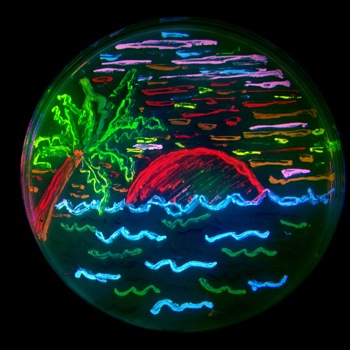
Beach drawn with fluorescing bacteria

Mission

The Biomedical Sciences (BMS) Ph.D. program is sponsored by UCSD Health Sciences. Our mission is to offer advanced and multidisciplinary training in basic and disease-oriented research. Our goal is to develop future generations of innovative biomedical scientists who will create new knowledge, solve problems and contribute to the health and well being of mankind.

History

The BMS program was founded in 1970 as an interdisciplinary Ph.D. program in the UCSD School of Medicine. The majority of the founding faculty members were basic and clinical scientists involved in the teaching of Physiology and Pharmacology courses for the first-year medical students. As a result, the program was initially named the Physiology/Pharmacology Graduate Program. With the growth of the research enterprise at the UCSD School of Medicine over the next two decades, the program faculty expanded to include research interests in cell and molecular biology, genetics, genomics, infectious disease, immunology, and cancer biology. To reflect the broader emphasis of its research training opportunities, the program was renamed as the Biomedical Sciences Graduate Program in 1990. Recently, the BMS program has further expanded to include the previous Molecular Pathology graduate program and the Sanford-Burnham Medical Research Institute in La Jolla.

BMS is now the umbrella graduate program with participating faculty members from every Department in the UCSD School of Medicine, the Skaggs School of Pharmacy and Pharmaceutical Sciences (SPPS), the Division of Biological Sciences, the Departments of Bioengineering, Chemistry/Biochemistry, and the Moores Cancer Center. Outside of UCSD and in addition to the Sanford-Burnham Medical Research Institute, BMS faculty members are also drawn from the Scripps Research Institute and the La Jolla Institute of Allergy and Immunology.

Facts

As of August 2011, four hundred and four seven students have graduated from the program with Ph.D. degrees. Our graduates are competitive in a variety of professional settings, particularly as academicians, members of research institutes, and as researchers and administrators in biotechnology and pharmaceutical companies.

Currently, there are 182 graduate students and 197 faculty members in the BMS Graduate Program.

2012/2013 BMS Guidelines(PDF)

Frequently Asked Questions

What are Training Tracks and Focus Areas?

To train creative, independent research scientists poised to tackle fundamental questions in biomedical research in the post-genomic era the Biomedical Sciences Program offers a flexible system of advanced training options.

Training Tracks in Genetics, Microbiology & Immunology, Molecular Cell Biology, Molecular Pharmacology, Molecular Pathology and Physiology provide a complete training program in each of these areas of specialization. Each training track has its own curriculum that builds from the first year core courses and includes advanced training activities, including seminar and journal clubs to facilitate detailed discussion of literature relevant to each field. Students who either do not wish to specialize in one of these areas or who seek subspecialty training may form a Custom Track in consultation with the faculty.

Focus areas are less structured programs of study designed to bridge or complement the Training Tracks while fulfilling all of the Biomedical Sciences training requirements. Students may design a Custom Track by choosing elective courses in one or more Focus Area: Bioinformatics, Cancer Biology, Developmental Biology, Endocrinology, Glycobiology , Neurobiology, Stem Cells, and Structural and Chemical Biology. Students may also customize their training independent of Tracks or Focus Areas in consultation with the faculty.

What is the ratio of students to faculty?

Currently, there are approximately 213 graduate students and 180 faculty. Biomedical Sciences is a multi-departmental and multi-institutional program, including faculty in the School of Medicine, the Howard Hughes Medical Institute, the Ludwig Institute for Cancer Research, the San Diego Supercomputer Center, and the neighboring Sanford-Burnham Medical Research Institute. The faculty are recognized nationally and internationally as authorities in their fields and the program is known as one of the best in the country.

Where are the graduates of the program?

As of August 2011, four hundred and four students have graduated from the program with Ph.D. degrees. Our graduates are competitive in a variety of professional settings, particularly as academicians, members of research institutes, and as researchers and administrators in biotechnology and pharmaceutical companies.

Do I receive a stipend?

All students in good standing in the program receive full financial support including tuition, fees, health insurance, and a stipend throughout their Ph.D. training. Sources of support are NIH training grants, university fellowships, individual research fellowships and research grants. Because of the changing economy, the stipend has been increasing continually. The stipend for 2011-12 is $29,500. Students who receive outside fellowships are eligible for supplemental awards in recognition of their achievement."

How do I apply?

The application procedure can be initiated online by clicking on the application link. Invitations for interviews are generally issued between January and March, with offers finalized by the end of March. All graduate programs require a commitment to a particular program by April 15th. For questions or comments regarding this site, please contact us at biomedsci@ucsd.edu.